
Re‑thinking School Engagement: What Helps Autistic Students Feel Safer at School.
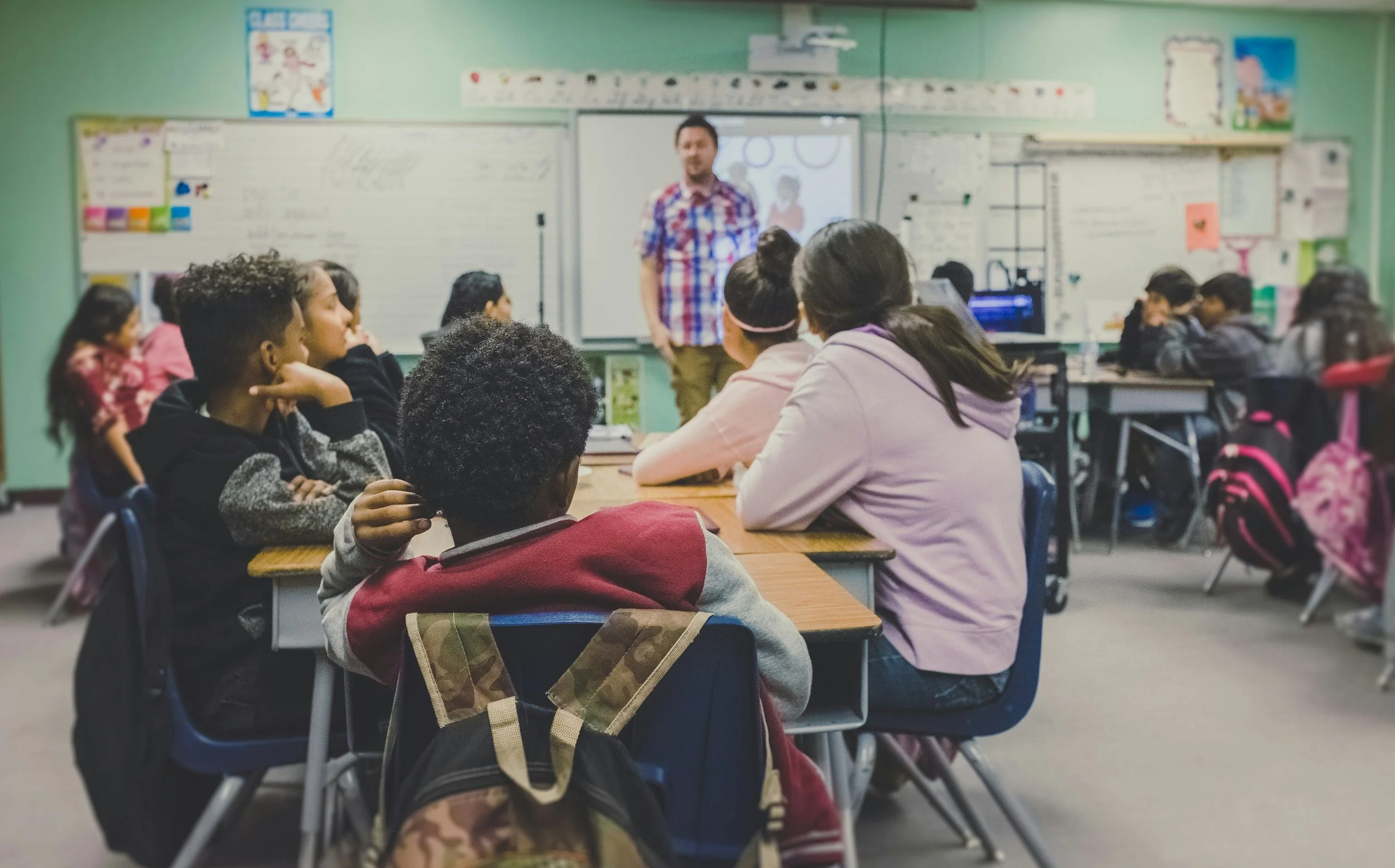
ID: A picture of seated students from behind looking to an adult standing at the front of the classroom.
Endorsed by Sonya Vargas Stagg, occupational therapist
There is increasing awareness that we need to shift our understanding of students experiencing school engagement difficulties from "school refusal" to "school can't". Rather than an issue of motivation or defiant non-compliance, school can't/school anxiety recognises the role of nervous system distress. But we need to go further than that. Treating school can't purely as an individual anxiety disorder still frames the young person as the 'problem' to be fixed, rather than examining the environment that may be failing them.
Emerging research tells a different story, and encourages us to recognise the role - and responsibility - of school environments in supporting engagement. A recent systematic review published in School Mental Health (2026) examined what actually contributes to school anxiety for Autistic children and young people. The findings challenge us to look closely at how schools themselves are structured – and who they are designed for.
For those of us working in neurodiversity‑affirming ways, this research powerfully validates what Autistic young people and families have been telling us for years across a range of youth mental health settings.
School can't is contextual
The review analysed studies from across Australia, the UK, Europe and the US, and found that school can't/school anxiety is most strongly linked to school‑based factors, not individual traits. In other words, anxiety is not caused by “being Autistic”, but by what happens to Autistic students in environments designed around neurotypical norms.
Key contributors identified included:
Unsafe social environments Fear of judgement, bullying, unpredictable peer behaviour, and pressure to socially “perform” in neurotypical ways.
Academic and cognitive demands Time pressure, inflexible expectations, fear of failure, and the hidden curriculum that assumes all students intuitively “know the rules”.
Physical and sensory environments Noise, crowding, bright lights, unpredictable schedules, transitions, and lack of access to quiet or regulating spaces.
These factors don’t exist in isolation: they interact, accumulate, and often intensify over time.
When belonging is missing, anxiety increases
One of the strongest findings in the review was the relationship between school belonging and anxiety. We’re especially passionate about this one, because we live and breathe connection at The Social Confidence Collective. We KNOW feeling connected to others is protective against many physical, social and mental health concerns, and that a sense of belonging is a critical ingredient to our wellbeing.
Students who felt less accepted and less safe in being themselves were more likely to engage in masking – hiding or suppressing Autistic traits to fit in and this was directly associated with higher anxiety. We also know the long-term impacts of masking = poorer mental health outcomes.
Masking, or camouflaging may look like “coping” or “fitting in” from the outside, but internally it comes at a high emotional cost.
Why so many interventions fall short
Despite the scale of school‑related anxiety around the world, so much research and many interventions focus on:
Treating anxiety as an individual disorder
Teaching Autistic students to adapt to current school systems
Increasing compliance and attendance without addressing underlying distress
The researchers argue that excluding Autistic perspectives and centring the neurotypical way of thinking, coping and learning, is a serious injustice.
When we only try to “fix” the student, we miss the opportunity to “fix” what’s actually causing harm, and what is getting in the way of making school a better experience for Autistic children and young people (and likely for many other students).
Why this matters
If a big reason for anxiety in school is due to the environment, then support must also be environmental. And as occupational therapists, we consider the physical AND social environment (and beyond).
This means:
Designing school environments with sensory, cognitive and social diversity in mind
Valuing Autistic voices and lived experience in decision‑making
Rethinking attendance, engagement and behaviour through a lens of safety and access and not compliance
Shifting from “Why won’t they?” to “What’s making this hard?”
At The Social Confidence Collective, this research aligns closely with our approach. Whether we are running groups or delivering training, the first thing we consider is how can we consider systems and environments to make things feel safer and more inclusive for young people.
Moving forward: Re‑thinking school engagement – Workshop on Tuesday 5th May, 2026.
If we want real change in school engagement, as well as long term-wellbeing for our community, we must shift from asking children and young people to adapt to systems that don’t fit, and instead change anddesign systems that are flexible enough for everyone. This article indicates that it’s not just good practice. It’s evidence‑based.
We know it’s tricky to do this in a big school system, and particularly for overworked (and underpaid) teachers and educators who are asked to do so much already. But what we show you in our workshop combined with the team at Can't Face School benefits so many students, and not just Autistic students. And on top of that, it can actually make things easier for all school educators and school staff.
We recommend checking out the article by Fisher and colleagues for more information. And if you want tools to tackle school anxiety or school can’t in a different way, in a way that the article suggests, sign up to our workshop.
Spots are limited to ensure a hands-on, relevant workshop for all attending.